400,000 evacuated as typhoon Parma lashes Philippines raising new flooding fears


The danger of heavy rains causing more flooding in Manila, the capital, was enough to force families to flee their homes in low-lying areas. Farther north thousands were evacuated. Nearly half a million people in total are now thought to have fled their homes because of typhoons.

But the worst affected area on Saturday was the coast in the north of Luzon, the biggest island in the archipelago, which was ravaged by winds in excess of 110 miles an hour.

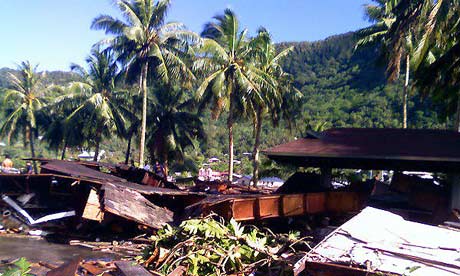
Trees were uprooted, electricity poles snapped, and homes and bridges destroyed by the force of the typhoon before it moved inland.

Tuguegarao City, capital of Cagayan Province, bore the brunt of typhoon Parma's fury, with 1.2 metres of rain in six hours. There were early reports of four deaths. That figure was expected to rise.

Troops were on standby in Manila to cope with expected flooding. Sewers were still blocked with mud and reservoirs were full after last week's heavy rains.

Philippine National Red Cross administrator in Cagayan, Aileen Torres, said: "Many areas around the city have been hard hit and we can not get out to see if people are safe because the roads are blocked by fallen trees.

"It's pretty chaotic at the moment with the wind howling outside and sheets of tin being torn off roofs."

Chito Castro, head of the Office of Civil Defense in Cagayan Valley, said the typhoon was blowing "very, very strong winds" across the province.

In Vietnam, across the South China Sea, the death toll rose to 107 from Typhoon Ketsana on Saturday, one of the deadliest typhoons to hit the nation in recent years.

The cost of damage was estimated at nearly £370 million. When the typhoon tore across the Philippines last weekend it killed at least 293 people. It also claimed 17 lives in Cambodia and 24 in Laos, neighbours of Vietnam.

All along the eastern seaboard of Luzon the army, police and volunteers forced thousands of people to move over the past three days ahead of the typhoon's landfall. But almost as soon as it struck land Parma turned and moved up the coast, before sweeping in across the northern province of Cagayan, a sparsely populated rural area.

It had been feared that the typhoon would make landfall farther south. The capital is still reeling for a tropical storm that poured a month's worth of rain on the city in just six hours flooding 80 percent of land area of the metropolis of 12 million people.

The clean-up in Manila has been painfully slow although international relief aid has poured in from overseas. Fearing a repeat of last weekend's disaster the president, Gloria Arroyo, declared a nationwide state of calamity. She began ordering local governments in the path of Typhoon Parma to force people out of their homes if they refuse to move.

Officials said the risk of another major disaster eased after Parma changed direction.

Weather forecaster Nathaniel Cruz said: "We all breathed a sigh of relief when the typhoon changed direction. But it still brought strong winds and rain over much of Cagayan before blowing further inland towards the mountains. It was a strong typhoon, packing winds at its height of 110 miles an hour," Mr Cruz said.

Dr Susan Espinueva, assistant weather services chief of the Hydro Metrological Division of the weather bureau, said five major dams in Luzon remain open and are releasing water to increase storage capacity in anticipation of the typhoon.

More than 400,000 people still remain in evacuation centres in areas hit hard by last weekend's floods.

Explainer: Samoa tsunami


The tsunami that killed dozens of people in the Pacific islands of Samoa and American Samoa, and sent smaller waves to the east coast of Japan almost 5,000 miles away, was caused by a huge subsea earthquake.

A tsunami – literally "harbour wave" in Japanese – is typically caused by seismic activity under the seafloor that sends fast-travelling waves to shore, sometimes with devastating consequences.

A powerful, shallow earthquake occurring under the sea can create waves that move at speeds of up to 500-600 miles per hour. As they approach the shore, the waves, though almost imperceptible in the open sea, slow and swell to heights of 10 metres or more.

While ordinary sea waves involve only the top layer of water, tsunamis comprise entire columns of water stretching to the ocean floor. They can travel several hundred miles, and the most powerful across entire oceans.

The use of "tidal wave" to describe tsunami has fallen out of favour: tsunami are not caused by tidal movements. Aside from earthquakes, they can be caused by volcanic eruptions, underwater explosions, landslides and other factors.

Experts believe major tsunamis occur every 10 years. Historically, almost 60% have occurred in the Pacific ocean, 25% in the Mediterranean and 12% in the Atlantic. The Indian ocean, scene of a huge tsunami that killed 230,000 people in 12 countries in December 2004, accounts for only 4% of recorded major tsunamis.

The largest recorded earthquake, of magnitude 9.5, which struck Chile in 1960, generated tsunamis that killed people as far away as Hawaii and Japan.

Not all tsunamis involve giant waves, however. The waves that reached the Japanese island of Hachijojima today, 10 hours after the earthquake, were described as "very weak" by the country's meteorological agency.

U.S. Threatens Iran With Sanctions Over Nuclear Program, Though Effectiveness in Doubt


President Obama has let Iran know that it faces an arsenal of sanctions if it fails to completely disclose the nature of its nuclear program and ambitions.

But with three rounds of U.N. sanctions already in place -- and Iran's defiant refusal Tuesday to put its nuclear program on the table when it meets Thursday with representatives of the five permanent Security Council members and Germany -- some officials question whether yet another round of sanctions, especially ones dependent on Russia and China, would have any teeth.

If Iran does not cooperate Thursday, the Obama administration has been working up plans to target Iran's energy, financial and telecommunications sectors, U.S. officials said Monday. A Congressional Research Service report released in early September examined the use of such possible penalties, as follows. Some contain apparent loopholes or would be virtually impossible to pass, while others are considered potentially effective:

-- Ban on exporting refined petroleum to Iran.

Iran, which suffers from a lack of refining infrastructure, imports between 30 and 40 percent of its gasoline needs, so a ban on oil exports is considered a potentially devastating penalty. A similar measure is also being considered in Congress.

"A gasoline quarantine is the sanction that would actually work," Rep. Mark Kirk, R-Ill., a co-sponsor, told FOX News Radio. Rep. Howard Berman, D-Calif., chairman of the House Foreign Affairs Committee, said Friday that he wants to bring the bill, which has hundreds of co-sponsors, before his panel in October.

The CRS report, though, noted that Iran could get around the sanctions by offering high prices to suppliers willing to defy the sanction or raising its own prices to discourage Iranian drivers from consuming gas. John Bolton, former U.S. ambassador to the United Nations, told FOXNews.com that Iran is in the process of expanding its refining capability anyway. "This was a good idea six or seven years ago," Bolton said. "Unfortunately, it's not going to squeeze them now."

-- Ban on international investment in Iran's energy sector.

According to the CRS report, this would essentially take the United States' Iran Sanctions Act worldwide. It could prevent companies of U.N. states from shipping to Iran the technology it needs to build oil refineries and other infrastructure. Some analysts consider this to be potentially effective. Nile Gardiner, with the Heritage Foundation, said a complete European freeze on Iran investment would have a "devastating impact" on the country's economy. The CRS report, though, noted that since the U.S. started penalizing foreign and U.S. investment in Iran's energy sector, no projects have been sanctioned and Iran has made agreements to "slow deterioration" of its energy sector. Bolton also expressed skepticism that Russia and China would ever support such a sanction.

-- Ban on international flights in and out of Iran.

The CRS report noted that a similar ban was imposed on Libya after the bombing of PanAm Flight 103. Another option is to expand the list of Iranian officials restricted from travel.

-- More financial and trade sanctions.

The option could impose a broad freeze on all Iranian assets abroad, or ban all transactions with Iranian banks. Another potential sanction could ban international finance institutions from lending to Iran. Some European nations, though, have already started to do this.

-- Insurance ban.

This option would ban insurance for Iran's tanker fleet, potentially making it more difficult and more expensive for Iran to ship oil. The CRS report noted that Iran claims to be able to "circumvent" this sanction.

-- Ban on Iranian oil imports and other trade.

This would ban countries from purchasing oil from and conducting other trade with Iran. The CRS report said this is the most sweeping possibility and the most unlikely, considering the impact a cutoff of Iranian oil would have on global energy prices and the fact that almost every U.S. ally conducts trade with Iran.

Iran is already subject to three rounds of U.N. sanctions, most of which restrict Iran's ability to import or export weapons and weapons material.

The U.S. officials said Monday that the U.S. would expand its own penalties against Iranian companies and press for greater international sanctions against foreign firms, largely European, that do business in the country unless Iran can prove that its nuclear activities are not aimed at developing an atomic weapon.

They said that the asset freezes and travel bans against Iranian and foreign businesses and individuals who do business in those areas are also being considered.

The options are on the table as diplomats from the five permanent members of the U.N. Security Council -- Britain, China, France, Russia and the United States -- and Germany prepare to meet with Iran's top nuclear negotiator on Thursday.

But U.S. officials familiar with the process that dates back to the Bush administration are skeptical that Iran will agree to demands to fully disclose its intentions. Iran repeatedly has denied it wants the bomb and maintains that its nuclear program is for peaceful purposes only.

A top Iranian official told Reuters that his country will not abandon its nuclear activities, "even for a second."

Bolton told FOX News on Monday that he's concerned another round of Security Council sanctions will be "just as watered down as the first three."

"I don't think sanctions are going to work," Bolton said. He said some increase in banking sanctions and tightening of trade restrictions might have some effect. But ultimately, he said they will likely be too incremental to deter Iran from pursuing its nuclear program.

Sen. John McCain, R-Ariz., said he's not "optimistic" about Thursday's talks, but that sanctions -- while worth trying - should not be the only tool available.

McCain told FOX News that he has "serious doubts" that Russia and China will cooperate and said the United States, in the long-term, needs to do more to advocate for "regime change" by encouraging dissenting elements inside the country. He also said a naval blockade of Iranian shipments, as conducted with Cuba under President Kennedy, should be "seriously considered." And he said the military option needs to stay on the table.

"There's no good options," McCain said, adding: "I think we have to try the sanctions."

Previous meetings -- the last in July 2008 -- have not made progress, and the officials said they did not think Thursday's talks in Geneva would produce any significant developments on the nuclear front.

Instead, the officials said they expected Iran to raise a broad range of global political concerns while the other participants focused on Iran's nuclear program, including the disclosure last week of a new uranium enrichment facility.

The officials, who spoke on condition of anonymity due to the sensitive nature of the talks, said they believed another round of talks would be scheduled before mid-November, at which Iran would face demands to address the international community's concerns.

If they refuse, the officials said the U.S. and its partners would move ahead with new penalties.

Hundreds more feared dead in Sumatra quake


Landslides triggered by an earthquake in western Indonesia wiped out at least three villages this week, an official said today.

As many as 644 people, including a wedding party, were buried under mountains of mud and debris, according to Rustam Pakaya, the head of the health ministry's crisis centre.

If all 644 are confirmed dead, the government's death toll from Wednesday's quake would jump to more than 1,300 from the current 715.

Pakaya said the villages of Pulau Aiya, Lubuk Lawe and Jumena were completely levelled by the landslides. Four hundred people attending a wedding in Pulau Aiya were buried by a quake-triggered landslide, and 244 people were buried in the two other villages.

Rescuers searching for survivors in the Sumatran city of Padang had been spurred on by a text message received from a survivor trapped in a collapsed hotel, saying that he and some others were alive.

But hopes were fading as sniffer dogs failed to detect life.

Padang's police chief said voices and handclaps had been heard from survivors buried in the Ambacang hotel since the 7.6-magnitude quake on Wednesday and that yesterday one survivor had sent a text message to relatives.

Colonel Boy Rafli Amar told reporters today that, after more than six hours of searching, "so far rescuers have found nothing".

In remoter areas outside Padang the full scale of the disaster was only starting to become clear, with survivors drinking coconut water after their drinking sources were contaminated, Reuters reported.

"In my village, 75 people were buried. There are about 300 people missing from this whole area. We need tents and excavators to get the bodies but the roads are cut off," said Ogi Martapela, 28, who said his older brother had died in the landslide.

The aid effort appeared to be cranking up today, but it has yet to reach many areas.

Testos, an Indonesian Red Cross worker at an aid station in central Padang, said his team now had about half the supplies it needed for people made homeless by the quake. "We also need drinking water and clothes because many peoples clothes were burnt in fires," he said. "And we need medicines to stop infection."

An Australian naval vessel set sail for Sumatra equipped with a mobile 40-bed hospital with surgical facilities, and Sea King helicopters, the country's defence ministry said. More emergency teams and further aid from Britain were being dispatched to the region today.

Oxfam sent water treatment units and plastic sheeting for shelters and extra staff from its warehouse in Bicester, Oxfordshire.

A team from the British Red Cross was due to leave London's Heathrow airport this afternoon to co-ordinate the charity's distribution of aid, while last night a team from the search and rescue charity Rapid UK arrived in Padang with specialist equipment such as thermal cameras and lifting gear.

They were the first official search crew from Britain to arrive in the crisis-hit country.

Another planeload of search and rescue personnel, organised by the Department for International Development, will arrive later today to join in the effort.

Sixty-five British firefighters were grounded at Gatwick airport yesterday after a fault developed in a government-chartered aircraft. The delay frustrated British officials, who said time was running out for people trapped in collapsed buildings.

But the military stepped in and an RAF C17 aircraft is flying the search and rescue experts and 17 tonnes of aid from RAF Brize Norton in Oxfordshire to Padang.

The quake, from one of the world's most active seismic fault lines along the Pacific "ring of fire", struck with a force that shook buildings hundreds of kilometres away in Singapore and Malaysia.

The United Nations estimated that 1,100 people had been killed in the earthquake. Indonesia's disaster management agency put the toll of confirmed dead and missing so far at 809.

Rescue teams, many wearing masks to cover the stench of bodies as they worked in the tropical heat, were fanning out from Padang to some of the worst-hit surrounding areas.

Asked about rescue efforts in Pariaman, the vice-president, Jusuf Kalla, said it was now about retrieving bodies. "We can be sure that they are dead. So now we are waiting for burials," he said on Metro TV.

Typhoon slams into northern Philippines


MANILA, Philippines — Typhoon Parma slammed into the Philippines today, ripping off roofs, toppling power pylons and swelling rivers in the country's mountainous north. At least two people were killed, an official said.

The storm -- the country's second in eight days -- cut a path across the northeastern tip of the main island of Luzon and was headed toward Taiwan, where evacuations of southern villages were under way.

The capital, Manila, escaped the worst of the storm. The city was still reeling from one on Sept. 26 that caused the worst flooding in four decades, killing at least 288 people and damaging the homes of 3 million more.

The provinces of Cagayan and Isabela were hardest hit today by powerful winds and drenching rain, cutting some communications and roads to some towns.

"The damage is quite heavy," Cagayan police Chief Roberto Damian told ABC-CBN television. "We are clearing highways and roads to reach people calling for rescue."

In Isabela, one man drowned and another died from exposure to the cold and wet weather, said Lt. Col. Loreto Magundayao of an army division based in the province.

Tens of thousands of people were moved to safe ground across the Philippines ahead of the typhoon, though officials said the threat of another national disaster eased as Parma changed course overnight Friday and bypassed the capital, parts of which are still chest-deep in floodwaters.

Trees were uprooted and power poles toppled in the provincial capital of Tuguegarao, Cagayan local government official Bonifacio Cuarteros told The Associated Press by telephone. Buildings had their roofs torn off. Similar damage was reported in neighboring Isabela.

Parma hit the coast packing sustained winds of 108 mph, though they weakened as the storm passed overland, the national weather bureau said.

Weather bureau chief Prisco Nilo warned that the heavy rain could trigger landslides and flooding, and strong winds could create tidal surges "similar to a tsunami" along the eastern coast.

After the storm changed course, officials began moving back tens of thousands of people who had been evacuated from coastal areas that might have been in the path of the storm.

Taiwan issued a storm warning and began moving people out of villages in the southern county of Kaohsiung, local official Lin Chun-chieh said. Flash floods from the last typhoon to hit the Kaohsiung area killed about 700 people in August.

The earlier storm to hit the Philippines, Ketsana, went on to hit other Southeast Asian countries, killing 99 in Vietnam, 14 in Cambodia and 16 in Laos.

It was part of more than a week of destruction in the Asia-Pacific region that has claimed more than 1,500 lives so far: an earthquake Wednesday in Indonesia; a tsunami Tuesday in the Samoan islands; and Typhoon Ketsana across Southeast Asia.

Another typhoon, Melor, was churning in the Philippine Sea, 1,600 miles to the east, threatening the U.S. territory of the Northern Mariana Islands.

Most businesses there were shut this morning, and residents of the island of Saipan who don't live in concrete homes moved to typhoon shelters, said Charles Reyes, Northern Marianas Gov. Benigno Fitial's press secretary.

Typhoon Ketsana Rips Through Vietnam, Killing at Least 23


Typhoon Ketsana continued her destructive path Tuesday, raging through central Vietnam. Rivers swelled to record highs, causing street flooding as fierce winds tore through towns. The storm has killed at least 23 in Vietnam and forced the evacuation of more than 170,000 from six central provinces. Ketsana began her course in the Philippines as a weaker tropical storm on Saturday, killing more than 200 people. The storm dumped 16 inches of rain in just 12 hours -- equivalent to the average rainfall for an entire month, and caused the worst flooding in 40 years.

Ketsana hit near the capital of Manila with devastating effects. Many who returned to the Philippines today found there was little left. As people bury their dead, dozens are still missing.

"I did not know what happened. We were on top of a roof but we got separated," said Gingery Comprendio, a mother of five. "The next day when I came back to our house, I saw my eldest already dead and my aunt saw my other child buried in the mud." Three of Comprendio's children perished and two are still missing, along with her husband.

Nearly half a million people have been displaced and more than 300,000 are living in shelters. Philippine officials have scrambled to organize relief efforts, facing harsh criticism for the government's slow response. Extra police were ordered to control looting in communities abandoned by residents who left in search of food, water and shelter.

Philippine President Gloria Macapagal Arroyo's administration said it was doing all it could and appealed to the international community for help. The president opened part of the presidential palace as a shelter and said her administration would donate two months' salary to those in need.

The U.S. donated $100,000 and sent 20 soldiers who were already in the region for counterterrorism training. The United Nations Children's Fund and the World Food Program have also offered aid.

U.S. Threatens Iran With Sanctions Over Nuclear Program, Though Effectiveness in Doubt


President Obama has let Iran know that it faces an arsenal of sanctions if it fails to completely disclose the nature of its nuclear program and ambitions.

But with three rounds of U.N. sanctions already in place -- and Iran's defiant refusal Tuesday to put its nuclear program on the table when it meets Thursday with representatives of the five permanent Security Council members and Germany -- some officials question whether yet another round of sanctions, especially ones dependent on Russia and China, would have any teeth.

If Iran does not cooperate Thursday, the Obama administration has been working up plans to target Iran's energy, financial and telecommunications sectors, U.S. officials said Monday. A Congressional Research Service report released in early September examined the use of such possible penalties, as follows. Some contain apparent loopholes or would be virtually impossible to pass, while others are considered potentially effective:

-- Ban on exporting refined petroleum to Iran.

Iran, which suffers from a lack of refining infrastructure, imports between 30 and 40 percent of its gasoline needs, so a ban on oil exports is considered a potentially devastating penalty. A similar measure is also being considered in Congress.

"A gasoline quarantine is the sanction that would actually work," Rep. Mark Kirk, R-Ill., a co-sponsor, told FOX News Radio. Rep. Howard Berman, D-Calif., chairman of the House Foreign Affairs Committee, said Friday that he wants to bring the bill, which has hundreds of co-sponsors, before his panel in October.

The CRS report, though, noted that Iran could get around the sanctions by offering high prices to suppliers willing to defy the sanction or raising its own prices to discourage Iranian drivers from consuming gas. John Bolton, former U.S. ambassador to the United Nations, told FOXNews.com that Iran is in the process of expanding its refining capability anyway. "This was a good idea six or seven years ago," Bolton said. "Unfortunately, it's not going to squeeze them now."

-- Ban on international investment in Iran's energy sector.

According to the CRS report, this would essentially take the United States' Iran Sanctions Act worldwide. It could prevent companies of U.N. states from shipping to Iran the technology it needs to build oil refineries and other infrastructure. Some analysts consider this to be potentially effective. Nile Gardiner, with the Heritage Foundation, said a complete European freeze on Iran investment would have a "devastating impact" on the country's economy. The CRS report, though, noted that since the U.S. started penalizing foreign and U.S. investment in Iran's energy sector, no projects have been sanctioned and Iran has made agreements to "slow deterioration" of its energy sector. Bolton also expressed skepticism that Russia and China would ever support such a sanction.

-- Ban on international flights in and out of Iran.

The CRS report noted that a similar ban was imposed on Libya after the bombing of PanAm Flight 103. Another option is to expand the list of Iranian officials restricted from travel.

-- More financial and trade sanctions.

The option could impose a broad freeze on all Iranian assets abroad, or ban all transactions with Iranian banks. Another potential sanction could ban international finance institutions from lending to Iran. Some European nations, though, have already started to do this.

-- Insurance ban.

This option would ban insurance for Iran's tanker fleet, potentially making it more difficult and more expensive for Iran to ship oil. The CRS report noted that Iran claims to be able to "circumvent" this sanction.

-- Ban on Iranian oil imports and other trade.

This would ban countries from purchasing oil from and conducting other trade with Iran. The CRS report said this is the most sweeping possibility and the most unlikely, considering the impact a cutoff of Iranian oil would have on global energy prices and the fact that almost every U.S. ally conducts trade with Iran.

Iran is already subject to three rounds of U.N. sanctions, most of which restrict Iran's ability to import or export weapons and weapons material.

The U.S. officials said Monday that the U.S. would expand its own penalties against Iranian companies and press for greater international sanctions against foreign firms, largely European, that do business in the country unless Iran can prove that its nuclear activities are not aimed at developing an atomic weapon.

They said that the asset freezes and travel bans against Iranian and foreign businesses and individuals who do business in those areas are also being considered.

The options are on the table as diplomats from the five permanent members of the U.N. Security Council -- Britain, China, France, Russia and the United States -- and Germany prepare to meet with Iran's top nuclear negotiator on Thursday.

But U.S. officials familiar with the process that dates back to the Bush administration are skeptical that Iran will agree to demands to fully disclose its intentions. Iran repeatedly has denied it wants the bomb and maintains that its nuclear program is for peaceful purposes only.

A top Iranian official told Reuters that his country will not abandon its nuclear activities, "even for a second."

Bolton told FOX News on Monday that he's concerned another round of Security Council sanctions will be "just as watered down as the first three."

"I don't think sanctions are going to work," Bolton said. He said some increase in banking sanctions and tightening of trade restrictions might have some effect. But ultimately, he said they will likely be too incremental to deter Iran from pursuing its nuclear program.

Sen. John McCain, R-Ariz., said he's not "optimistic" about Thursday's talks, but that sanctions -- while worth trying - should not be the only tool available.

McCain told FOX News that he has "serious doubts" that Russia and China will cooperate and said the United States, in the long-term, needs to do more to advocate for "regime change" by encouraging dissenting elements inside the country. He also said a naval blockade of Iranian shipments, as conducted with Cuba under President Kennedy, should be "seriously considered." And he said the military option needs to stay on the table.

"There's no good options," McCain said, adding: "I think we have to try the sanctions."

Previous meetings -- the last in July 2008 -- have not made progress, and the officials said they did not think Thursday's talks in Geneva would produce any significant developments on the nuclear front.

Instead, the officials said they expected Iran to raise a broad range of global political concerns while the other participants focused on Iran's nuclear program, including the disclosure last week of a new uranium enrichment facility.

The officials, who spoke on condition of anonymity due to the sensitive nature of the talks, said they believed another round of talks would be scheduled before mid-November, at which Iran would face demands to address the international community's concerns.

Early referendum returns in Ireland suggest Yes vote to Lisbon Treaty


DUBLIN, Oct. 3 (Xinhua) -- The EU's Lisbon Treaty looks set to be passed by a decisive majority in Ireland, as tallies from around the country indicate a massive swing to the "Yes" side.

Although there are no official results yet, tallies everywhere are showing a big increase in support for the Treaty, RTE Radio reported.

Irish Foreign Affairs Minister Micheal Martin said: "I'm delighted for the country. It looks like a convincing win for the 'Yes' side ... It's good for Ireland," he said.

According to electoral officials, the number of "Yes" votes have exceeded "No" in 41 of Ireland's 43 constituencies.

Tallies from Dublin South West indicate a clear "Yes" vote with60 percent of boxes open. The constituency had the highest "No" vote during the referendum in 2008 when the Irish overwhelmingly rejected the treaty.

All boxes are opened in Kerry North and tallies are indicating a 60:40 margin in favor of the "Yes" side with turnout more than 50 percent.

Indications from other constituencies appear to be the same -- the "Yes" vote is reported to be up everywhere and, so far, only Donegal North East has voted "No."

Swedish Foreign Minister Carl Bildt said: "It is an important victory for Ireland and for all of Europe."

Bildt, whose country holds the EU presidency, said that it was just a matter of time until the union "finally can push the button for the better European cooperation that the Lisbon Treaty will give us."

Count staff started opening ballot boxes at 9 a.m. local time (0800 GMT), and the sorting of votes is continuing.

As the ballot papers are being sorted, a clear picture is starting to emerge from tallies -- showing a decisive swing to the "Yes" side, but a final official result is expected at around 5 p.m. (1600 GMT).

Irish Prime Minister Brian Cowen is expected to make a statement after the people's verdict becomes known.

"The people's decision is sovereign and, of course, that will be the case but I'm hopeful that we'll have a good outcome," he said.

During the previous referendum in June 2008, Irish voters rejected the treaty with 53.4 percent voting No and 46.6 percent "Yes" due to their concerns over Ireland's military neutrality, its opposition to abortion, and national rights on taxation.

In June, the EU took a major step forward, agreeing to provide legally binding guarantees to Ireland to overcome voters' misgivings.

The Lisbon Treaty, signed by EU heads of state and government in December 2007 in the Portuguese capital of Lisbon, replaced a failed EU constitution, which was rejected by voters in France and the Netherlands in 2005.

The charter must be ratified by all 27 EU member states and Ireland is the only EU member state to hold a referendum. So far, 26 countries have approved the document through parliamentary vote, but Polish President Lech Kaczynski and Czech President Vaclav Klaus have yet to sign it.

Indonesia earthquake: 3,000 still trapped


Rescue teams from around the world poured into the worst-hit area around the regional capital of Padang as chances of finding survivors grew slimmer.

Block after block of toppled hotels, hospitals, office buildings and schools had yet to be searched and dozens of unclaimed corpses were laid out in the scorching sun at Dr. M. Djamil General Hospital, Padang's biggest, which was damaged in the quake.Wednesday's 7.6 magnitude temblor devastated a stretch of more than 60 miles along the western coast of Sumatra island, prompting a massive international aid operation in a country where earthquakes have taken a huge human toll in recent years.

More than 20,000 houses and buildings were destroyed and 2,400 people hospitalised across seven districts, said Priyadi Kardono, a spokesman for the national disaster agency.

Fuel was being rationed amid a power outage, water and food were in short supply and villagers dug out the dead with their bare hands, witnesses and aid agencies said.

Contrasting that grim picture of grief and destruction, at least one survivor was pulled from the rubble on Friday. Virgo, a 19-year-old English student, was found alive under the rubble of her college in Padang, the Foreign Language School of Prayoga.

"Her dead friends were beneath and above her. Fortunately, she was able to withstand the stench for 40 hours," said Dubel Mereyenes, the doctor who treated her. "She has a severely injured leg, but we will try to avoid amputation."

Another survivor was a teacher at the same school, Suci Ravika Wulan Sari, who was extracted from the debris almost exactly 48 hours after the college crumbled in the 5.16 pm quake, killing dozens of students.

Elsewhere in the city, at the site of the former Ambacang Hotel where as many as 200 were feared trapped, rescue workers detected signs of life under a hill of tangled steel, concrete slabs and broken bricks of the five-story structure, said Gagah Prakosa, a spokesman of the rescue team.

As the scale of the destruction became clearer, Vice President Jusuf Kalla told reporters in the capital, Jakarta, that the recovery operation would cost at least $400 million (£250 million) because the "impact of this disaster has worsened."

Military and commercial planes shuttled in tons of emergency supplies, although rural areas remained cut off from help due to landslides that reportedly crushed several villages and killed nearly 300 people.

Cuba: Close, But No Cigar for U.S. Tourists


The country famed for vintage architecture, rum, cigars and '50s cars has a new spin.Cuba and its tourism industry are ramping up with hip hotels, Chinese-made tour buses and restaurants serving trendy international dishes, partly in anticipation of an influx of Americans and their greenbacks.

At the rooftop pool of Havana's Hotel Saratoga, where rates run $200 and up and two-story suites have humidors and marble bathrooms, young Brits order mojitos. On the street below, near crumbling apartment buildings of Old Havana, a boy peers through the hotel restaurant's window and stretches a hand toward patrons nibbling delicacies unavailable to the average rice-and-beans-eating Cuban, miming hunger.

In the 50th anniversary year of the revolution that brought Fidel Castro into power, tourism is the No. 1 moneymaker, while locals might subsist on $20 a month and omnipresent food rationing.

U.S. citizens can't legally travel to Cuba because of a 1962 U.S.-imposed trade embargo with the Communist island 90 miles south of Key West.But the regime favors U.S. tourism, and stateside hotel and cruise execs are quietly scoping out the scene.

Illicit Americans walk the cobbled streets of Old Havana, photograph pastel-colored Spanish Colonial buildings and historic churches, buff up their salsa, puff on mellow cigars and lie on the largest Caribbean island's white-sand beaches.

They slip in via Canada, Mexico and other Caribbean countries, and immigration officers keep them out of trouble back home by not stamping U.S. passports with the taboo "Cuba" imprint.

About 41,000 of last year's 2.3 million visitors were from the USA, including legal Cuban Americans, Cuban officials say. Cuba welcomes U.S. tourists, attracted despite the chance of fines or surrender of passports if caught when re-entering the USA.

Visitors are drawn by Cuba's "unique flavor, sensualism, beautiful people," says Christopher P. Baker, author of Cuba guides, including Moon Cuba.

"In Cuba, everyone is happy, even if they've got nothing," says Havana-bound Liuber Leiva, 33, of Miami, in gold earring and baggy shorts, at the Miami airport. He shows how to get bags shrink-wrapped to thwart theft and negotiate daunting lines of Cuban Americans with stacks of gift-loaded suitcases. They now can visit without restriction.

Africans With Albinism Hunted: Limbs Sold on Tanzania's Black Market


Mariamu Stanford, a soft-spoken, 28-year-old single mother from rural Tanzania, has earned a grim distinction: She's one of only two people with albinism -- a group that has faced discrimination in East Africa -- to survive a brutal attack by those wanting to sell the limbs of albinos on the black market. In her first interview with American journalists, Stanford greeted ABC News visitors with a shy smile, wearing a short-sleeve blouse that revealed the scars of her ordeal.

Last October, men armed with machetes entered her hut and began cutting at her arms in a gruesome attempt to amputate them, Stanford told ABC News.

"In the middle of the night, a group of men stormed in and said, 'We are going to cut your arm off, and if you scream we'll cut the other arm off,'" she said. "And then they started to chop my right arm off. And because I was screaming, they also started to do the same with the other."

Watch the full story on "20/20" TONIGHT at 10 p.m. ET

After her attackers fled, it took six full hours for Stanford to get medical treatment. Five months pregnant at the time, she lost both arms and her unborn child. A devout Christian and member of her church choir, Stanford was caught up in a grisly trade inspired by a renegade set of witch doctors; they claim potions made of the blood, skin or bones of an albino can make people wealthy and bring good luck.

We spoke just outside the two-room mud-floor building, where she lives with her parents, four young siblings and her son, a toddler. Her artificial limbs, donated by a well-wisher, lay discarded because they were painful and cumbersome.

Despite Tanzania's reputation as a tourist mecca known for safaris and visits to Mount Kilimanjaro, people with albinism are being hunted down like animals. Since 2007, 54 Tanzanian albinos, including children, have been murdered by gangs of men who hack off arms, legs or genitals. Observers said even more cases of attacks have gone unreported.

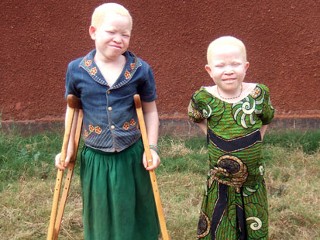
Tanzania is arguably the worst place in the world to be born with albinism -- a hereditary genetic condition caused by two recessive genes resulting in little or no pigment production in the hair, skin or eyes. The country has one of the largest populations of albinos in the world -- an estimated 170,000 -- and they are being targeted

Guinea soldiers shoot dead 'dozens' of protesters


Opposition parties had organised the protest in the capital's main football stadium, which drew some 50,000 people. Demonstrators chanted "We want true democracy."

But soldiers from the presidential guard entered the stadium and fired into the crowd, reportedly using tear gas, live ammunition and baton charges against the demonstrators.The number killed in the attack remains unclear, but witnesses reported seeing dozens of bodies.

A doctor, speaking on condition of anonymity, told AFP that 58 people had been brought to a Conakry morgue on Monday.

"We have counted 52 bodies and six more have just come in," said the doctor at the Donka university medical centre.

But a member of the Red Cross told AFP that military commanders had issued instructions for all bodies to be taken to the Alpha Yaya Diallo military camp, rather than to morgues.

Elsewhere, at Ignace Deen hospital, a medical source told AFP that an army truck had come by to pick up "dozens of bodies" to be taken to "an unknown destination".

Tensions have risen amid rumours that military leader Capt Moussa "Dadis" Camara may run in presidential elections scheduled for Jan 31.

Capt Camara came to power in a coup last December, hours after longtime dictator Lansana Conte died. He initially said he would not run in the election, but has recently said he has the right to run if he chooses.

Australia begins vaccinations


Australia's campaign will start with those most at risk in the pandemic, including health care workers, pregnant women and the chronically ill.

The federal government has ordered 21 million doses of the vaccine developed by Melbourne-based CSL Ltd.

A total of 5.5 million doses have been delivered across the country, enough to vaccinate 30 per cent of the population, Health Minister Nicola Roxon said. Two million doses each month will be made available until January.

Ms Roxon dismissed concerns about the vaccine's safety but said some people could have minor side effects, including mild nausea.

'I am very satisfied ... this vaccine is strong and effective,' Ms Roxon said. 'It is far safer to get this than it is to get swine flu.'

The first injections will be given to those most at risk from swine flu, including the chronically ill, the obese and indigenous people in remote communities, said Robert Booy, head of clinical research at the National Centre for Immunisation Research and Surveillance.

As of Wednesday, 180 Australians had died from swine flu. More than 4,700 people have been hospitalised.

Children under 10 cannot yet be vaccinated, but pediatric trials of the vaccine continue. -- AP

Israel, Hamas in mutual gestures on prisoners


GAZA (Reuters) - Israel will free 20 Palestinian women from jail as early as Friday in exchange for a videotape from Hamas proving an Israeli soldier held in the Gaza Strip since 2006 is alive, officials on both sides said on Wednesday.

Egyptian and German mediators are continuing to work on a final deal to swap the soldier, Gilad Shalit, for hundreds of Hamas prisoners. The negotiations are part of international efforts to ease Israel's blockade of the Hamas-run Gaza Strip.

"It is important for the entire world to know that Gilad Shalit is alive and well and that Hamas is responsible for his well-being and his fate," Israeli Prime Minister Benjamin Netanyahu said in a statement.

Shalit, now 23, was spirited into the Gaza Strip by Islamist militants who tunnelled into Israel three years ago in a raid in which two Israeli soldiers and two of the attackers were killed.

An Israeli official said the handover of the 20 women and the tape should take place on Friday, at the end of a two-day period when Israeli citizens can appeal in court against their release, an Israeli official said.

He added that a German mediator had already seen the video and believed it genuinely showed Shalit during recent weeks -- and certainly after Israel's offensive in Gaza in December and January in which some 1,400 Palestinians were reported killed.

The video lasts about a minute, said a spokesman for the Popular Resistance Committees, one of the Hamas allies that took part in the raid in which Shalit was captured.

Aid - a new model?


Alem Abebe is a 14-year-old girl who left home three years ago and made her way to the capital. She now earns 50 US cents a day working at the Abebech Gobena project in one of the city’s slums. It’s not enough to send money home, but enough to survive — and to pay for night school.

But by the World Bank definition, Abebe and other women working at the project are still extremely poor: they earn much less than the daily income of $1.25 or roughly one euro that’s now used to measure poverty.

But the whole point isn’t to hand out money for free: but to help women who would be on the street get a job, an education - and a future.

It’s a departure from previous aid models, which saw large sums handed over by the West to African countries, a system that some say hasn’t really helped the world’s poorest continent.

“The model that’s coming up or that I’m proposing is essentially a model where Africa and Africans become equal partners with the rest of the world, not one where there’s a donor and a recipient where Africans are viewed as secondary citizens,” Dambisa Moyo, a Zambian author, told Reuters Africa Journal.

“This is really an environment where Africans are getting something, they’re getting paid for doing something, for being entrepreneurs, for generating something, for building products, for establishing infrastructure. It’s not the aid model where you get money for nothing,” said Moyo, whose book Dead Aid argues that Western generosity often doesn’t actually help in the long run.

Today the global financial crisis means that Western countries are trying to save their own economies and are no longer prepared to spend so much on aid. So is direct aid still a solution. Or are small projects that generate employment better at fighting poverty?

Explainer: Samoa tsunami


The tsunami that killed dozens of people in the Pacific islands of Samoa and American Samoa, and sent smaller waves to the east coast of Japan almost 5,000 miles away, was caused by a huge subsea earthquake.

A tsunami – literally "harbour wave" in Japanese – is typically caused by seismic activity under the seafloor that sends fast-travelling waves to shore, sometimes with devastating consequences.

A powerful, shallow earthquake occurring under the sea can create waves that move at speeds of up to 500-600 miles per hour. As they approach the shore, the waves, though almost imperceptible in the open sea, slow and swell to heights of 10 metres or more.

While ordinary sea waves involve only the top layer of water, tsunamis comprise entire columns of water stretching to the ocean floor. They can travel several hundred miles, and the most powerful across entire oceans.

The use of "tidal wave" to describe tsunami has fallen out of favour: tsunami are not caused by tidal movements. Aside from earthquakes, they can be caused by volcanic eruptions, underwater explosions, landslides and other factors.

Experts believe major tsunamis occur every 10 years. Historically, almost 60% have occurred in the Pacific ocean, 25% in the Mediterranean and 12% in the Atlantic. The Indian ocean, scene of a huge tsunami that killed 230,000 people in 12 countries in December 2004, accounts for only 4% of recorded major tsunamis.

The largest recorded earthquake, of magnitude 9.5, which struck Chile in 1960, generated tsunamis that killed people as far away as Hawaii and Japan.

Not all tsunamis involve giant waves, however. The waves that reached the Japanese island of Hachijojima today, 10 hours after the earthquake, were described as "very weak" by the country's meteorological agency.

Analysis: Iran plant could defer Israel strike


JERUSALEM -- It may seem counterintuitive, but the news that Iran has a second, clandestine uranium enrichment plant, and has just test-fired long-range missiles, could actually put off any plans for a quick Israeli strike.

To be sure, Israel still sees an Iran with nuclear weapons as its greatest threat and has not taken a military assault off the table. Its defense minister, Ehud Barak, said as much in London on Tuesday.

Neutralizing the threat remains Israeli Prime Minister Benjamin Netanyahu's top priority. And the spectacle of upgraded missiles flying across Israel's TV screens only feeds its resolve to keep Iran at bay.

Yet the latest developments are likely to push world powers to impose the tough sanctions that Israel has been seeking. Giving Israel's position a higher profile on the world stage may also make it less inclined to act unilaterally.

For years, Israel has warned that Iran was not being honest about the size and nature of its nuclear program, which Tehran claims is designed to produce energy. Israel has portrayed last week's disclosure of the second facility, hidden in the arid mountains near the holy city of Qom, as confirmation of its suspicions.

"If there ever was a thought of (Israel) going with a military option, it's been put off," said Ephraim Kam, the deputy director of Tel Aviv University's Institute of National Security Studies. "Iran was caught lying again, it's clearly moving toward becoming a nuclear power.

"Now the Americans are better able to try to persuade the Europeans, and even the Russians, to go for tougher sanctions," he said.

Meir Javedanfar, an Iranian-born analyst working in Israel, agreed.

"It's likely that Israel will now be included more in the decision-making process," he said. "The more Israel sees itself as part of the process of dealing with the Iranian nuclear question, the less likely it is that it will take part in a unilateral action."
ad_icon

In a meeting with British Defense Minister Bob Ainsworth, Israel's Barak said the existence of the second plant should trigger harsh sanctions, according to a statement from his office which added that Israel "is not removing any option from the table."

The reference to "options" is seen as a signal that an Israeli military strike remains a possibility.

Iran's nuclear chief, Vice President Ali Akbar Salehi, said Tuesday that his country built the newly revealed facility inside a mountain and next to a military site to protect it from attack. He didn't identify the potential attackers.

German voters face poll conundrum


The cobbled stone cellars, built in 1177 by Cistercian monks, are cool and dark, lined, now as then, with 1,000-litre barrels made from dark-brown German oak. Closed off from the sun for centuries, these silent, arching caverns form the heart of the Mönchhof (monks' house) riesling winery in the village of Ürzig, purchased from Napoleon by the Eymael family in 1804. They have carefully nurtured it ever since.

But standing outside the cellar entrance, in front of rows of grape-heavy vines that rise vertiginously above him from the green-yellow banks of the Mosel, the estate's current owner, Robert Eymael, was more concerned with the future than the past. "Germans are not ready for change. They don't like change in general. It's the opposite of Obama," he said. "Germans want an easy life softened with plenty of fabric conditioner and six weeks' holiday a year. The result will be the same as we have now."

Eymael was referring to tomorrow's federal elections that pit Chancellor Angela Merkel's Christian Democratic Union (CDU) against the Social Democrats (SPD), led by the foreign minister, Frank-Walter Steinmeier. For the last four years, the two parties have been uneasy partners in a "grand coalition". Now they are fighting for primacy, each hoping to form a government with the support of smaller parties such as the neoliberal Free Democrats (FDP), the Greens, or even the much-ostracised Left party.

Dishonest politicians

Final pre-election polls suggest Merkel might just win enough votes to form a centre-right government with the FDP – but another uncomfortable CDU-SPD stitch-up is equally possible. Eymael hopes the outcome will generate the decisive leadership Germany needs at a time of economic crisis.

"We cannot afford to continue in this way. The public debt is growing fast, but the politicians are not honest with us. The truth will come out after the election, but not before," he said. German voters were not being offered clear choices - but neither did they want to face up to the challenges threatening their largely comfortable existence.

Change is a key issue in the conservative, tradition-bound Mosel valley, home to 5,000 vineyards in Germany's leading wine-producing state of Rhineland-Palatinate - as it is for the country as a whole. Growers say low-end barrel prices have fallen to almost unsustainable levels, while export demand for higher quality riesling in the UK and US has dropped. Their concerns are reflected nationally. The recession, a changing social order, environmental worries such as future nuclear energy policy, and a shifting perspective on Afghanistan and other international issues are all straining the politics-as-usual approach.

"This is probably the most important election of my lifetime," said Tom Drieseberg, of the Wegeler winery, producer of the world-famous Bernkasteler Doctor Riesling, which retails at £45 a bottle. "Public spending is expanding and the real reallocation of funds is not up-down or vice-versa, it's not from rich to poor. It's from the people to the government. The next generations will have to pay the price. I am privileged to have been brought up in this system. I am 58. I have never known war, I have never been hungry. But we have to change the way we do things in this country."

Drieseberg said he hoped the free-market FDP would win outright, but added: "Anything would be better than continuing with two big, self-satisfied parties happily spending the money of our children and grand-children."

Beneath the sparkling chandeliers, coats of arms and high ceilings of Kloster Machern, near the studiously picturesque medieval village of Bernkastel, Matthias Knebel has joined a wine-tasting organised by the local growers' association. The participants hold their glasses to the light, swirl the wine around, sniff, then slurp delicately, making a burbling, bubbling noise with their tongues. Then they spit the precious liquid into a pot and try another bottle.

"I don't understand why people say there is no choice between the parties. I don't think they are paying attention," Knebel said. "The private sector produces 80% of tax revenue. The government has to make it easier for companies to create new business and jobs. But the SPD's main idea is to increase the minimum wage. This is not affordable for me. In fact it's ridiculous."

Knebel said that like Germany as a whole, the Mosel valley was changing despite itself. Its economy was built around family businesses but some young people did not want to stay, preferring to study or earn higher wages in the cities. The population was ageing, there were fewer children, there was no new industry.

"I would be frightened about what would happen if there was no viticulture and tourism. There would be no jobs, the valley would die," Knebel said. But he believed the wineries' long-term prospects were favourable as long as they concentrated on high quality and built on the good name they had established since the bad old days of the 1970s when cheap, sweet German white wine sent a whole generation of tipplers heading for Spain, Chile and Australia.

Although the Rhine-Palatinate is an SPD-controlled state, posters portraying a smiling Merkel predominate in the Mosel villages. "Wir haben die Kraft" (we have the power), they say. And according to Knut Aufermann, a sound artist living in Ürzig, holding on to power is all the chancellor is interested in. To voters afraid of change, Merkel was the perfect candidate, he said.

"Merkel stands for no change at all. She does not say anything," Aufermann said. "There is fear everywhere about economic security, people are afraid of falling through the cracks and losing their status. It's outrageous what happened with the banks, but no one is asking, 'who allowed this to happen?' Maybe there are a few protests in Berlin or Hamburg, but in most of the country they keep quiet. I call it the ostrich strategy."

Political apathy, or a disinclination to rock the boat, is undermining a campaign, backed by Aufermann, to stop the building of a huge motorway bridge across the Mosel valley – a plan that crudely symbolises the challenges facing the area. Known as the Hochmoselübergang (the high Mosel flyover), the bridge will be about 150 metres high and more than a mile long, and will dwarf the picture-book villages and Gothic church spires below it. It will be visible for miles around.

Aufermann said the bridge and its link roads would be an ecological catastrophe, disrupting water supplies to some of the Mosel's best-known vineyards and causing air and noise pollution. Its main purpose, he added, was to serve the Ryanair hub at Frankfurt-Hahn regional airport and satisfy the grandiose ambitions of local bureaucrats, but there was insufficient traffic to justify it.

Knife in the heart

Rudolf Trossen, the valley's only bio- dynamic winegrower and producer of the noted Schieferblume (slate flower) riesling, said the bridge was "a knife in the heart of the Mosel". But at present, the €260m plan is going ahead, thanks in part to the indifference or collusion of local and national politicians.

Pouring out generous samples of his various concoctions at a comfortable restaurant off a quiet 13th century square in Bernkastel, Erni Loosen of the long-established Dr Loosen winery summed up the national mood on election eve: most people knew things had to change, but didn't really want them to. If they could, they preferred to avoid the issues.

"I'm 100% certain it will be another CDU-SPD coalition – 100% certain," Loosen said. "The reason is simple. We know nothing will happen if it stays the same." So why not have another glass?

Iran to test fire missile capable of hitting Israel


Iran announced plans today to test-fire a long-range missile capable of hitting Israel as it adopted a defiant stance over its nuclear capability.

It also fired several short-range missiles using a multiple rocket launching system for the first time during military exercises by the regime's Revolutionary Guards.

General Hossein Salami, head of the Revolutionary Guard Air Force, said that Iran would test medium-range Shahab-1 and Shahab-2 missiles on tonight and long-range Shahab-3 missiles on Monday, during drills set to last several days.

It is thought the Shahab-3 now has a range of up to 1,200 miles. General Salami said that Fateh, Tondar and Zelzal missiles were test-fired today. All are short-range, surface-to-surface missiles.

The official English-language Press TV showed pictures of at least two missiles being fired simultaneously and said they were from Sunday’s drill in a central Iran desert. In the clip, men could be heard shouting “Allahu Akbar" as the missiles were launched.

“We are going to respond to any military action in a crushing manner and it doesn’t make any difference which country or regime has launched the aggression,” General Salami said.

Iran has had the solid-fuel Fateh missile, with a range of 120 miles, for several years. It also has the solid-fuel, Chinese-made CSS 8, also called the Tondar 69, which has a range of about 93 miles.

The multiple launcher used for the first time today is designed for the Zelzal missile, which has a range of up to 185 miles.

The tests came two days after the US and its allies disclosed that Iran had been secretly developing a previously unknown underground uranium enrichment facility and warned the country it must open the nuclear site to international inspection or face harsher international sanctions.

The newly revealed nuclear site in mountains near the holy city of Qom is believed to be inside a heavily guarded, underground facility belonging to the Revolutionary Guard.

After the strong condemnations from the US and its allies, Iran said yesterday that it would allow UN nuclear inspectors to examine the site.

Philippine flood death toll rises


The Philippines government says 240 people are now know to have died in flooding caused by Tropical Storm Ketsana, the AFP news agency reports.

The country has appealed for foreign aid to deal with the disaster, which has displaced more than 450,000 people.

Some 374,890 people are living in makeshift shelters, three times more than previously reported.

Defence Secretary Gilberto Teodoro said the situation could become worse if aid supplies run out.

The latest death toll is a sharp rise from the previously announced figure of 190 dead.

In a statement reported by AFP, the National Disaster Coordinating Council said the rise came after more than 90 deaths were recorded in Manila.

Earlier, Mr Teodoro appealed for humanitarian assistance from the international community.

"We are trying our level best to provide basic necessities, but the potential for a more serious situation is there," he said, in a nationally televised address.

"We cannot wait for that to happen." Many people have been left with nothing but what they are wearing

Mr Teodoro said troops, police and volunteers had so far been able to rescue more than 7,900 people.

Rescue workers are continuing to pull bodies from the mud and swollen rivers.

But the BBC's Alistair Leithead in Manila says the rescue operation is now focussing on getting supplies to those who have been displaced.

"We are waiting for more aid to arrive," said Armando Endaya, a community leader sheltering in a gymnasium in Manila with 3,000 other people.

"We are trying to mobilise our own relief operations here. But we need more help," he told AFP.

Overwhelmed

On Sunday, Philippine President Gloria Arroyo said the storm was "an extreme event that has strained our response capabilities to the limit". But she said it was "not breaking" the country.

However, rescue workers are reported to be overwhelmed by the scale of floods.

The head of the National Disaster Co-ordinating Council, Anthony Golez, said resources were being spread too thinly.

"We are concentrating on massive relief operations. The system is overwhelmed, local government units are overwhelmed," Mr Golez told reporters.

"We were used to helping one city, one or two provinces but now, they are following one after another. Our assets and people are spread too thinly."

One doctor in Manila told the BBC that he had been working 24-hour shifts in a hospital flooded with water since Saturday.

The authorities were now focusing on providing food, medicine and other necessities to those in emergency shelters, he added. Telephone and power services in some parts of Manila remain cut.

Ketsana, with winds of up to 100km/h (62mph), hit the Philippines early on Saturday, crossing the main northern Luzon island before heading out toward the South China Sea.

Over the weekend, the government declared a "state of calamity" in Manila and the 25 storm-hit provinces, including many that have not experienced widespread flooding before, allowing access to emergency funds.

Officials say more than 40cm (16in) of rain fell on Manila within 12 hours on Saturday, exceeding the 39cm average for the whole month of September.